

Journey Highlights
- Route: Rajasthan’s desert cities and heritage palaces → Varanasi on the Ganges
- Style: Boutique soulful luxury—heritage stays, private guiding, unhurried pacing, depth over spectacle
- Rajasthan: Golden-hour forts, quiet courtyards, textile and jewelry artisans, desert air and candlelit dinners
- Sacred culture: Temple moments, story-led walks through old cities, music and incense, beauty as devotion
- Varanasi: Dawn boat on the river, evening aarti ceremony, alleys of bells and marigolds, eternity in the everyday
- Essence: A journey through beauty and surrender—where the outer world becomes a mirror for the inner one

India doesn’t arrive gently.
It arrives like color. Like heat. Like music you feel in your bones before you understand the melody. It asks for your attention, then takes it—not with force, but with intensity so alive you can’t look away.
Rajasthan and Varanasi are two worlds that seem impossible to hold in the same journey until you realize they are two sides of the same truth. Rajasthan teaches you beauty as architecture, craft, and atmosphere. Varanasi teaches you beauty as devotion, surrender, and the sacredness of impermanence.
You don’t come back from this journey with souvenirs. You come back with a different relationship to life.
Rajasthan: Desert Palaces & the Art of Beauty
In Rajasthan, the light is golden even when the sun is high.
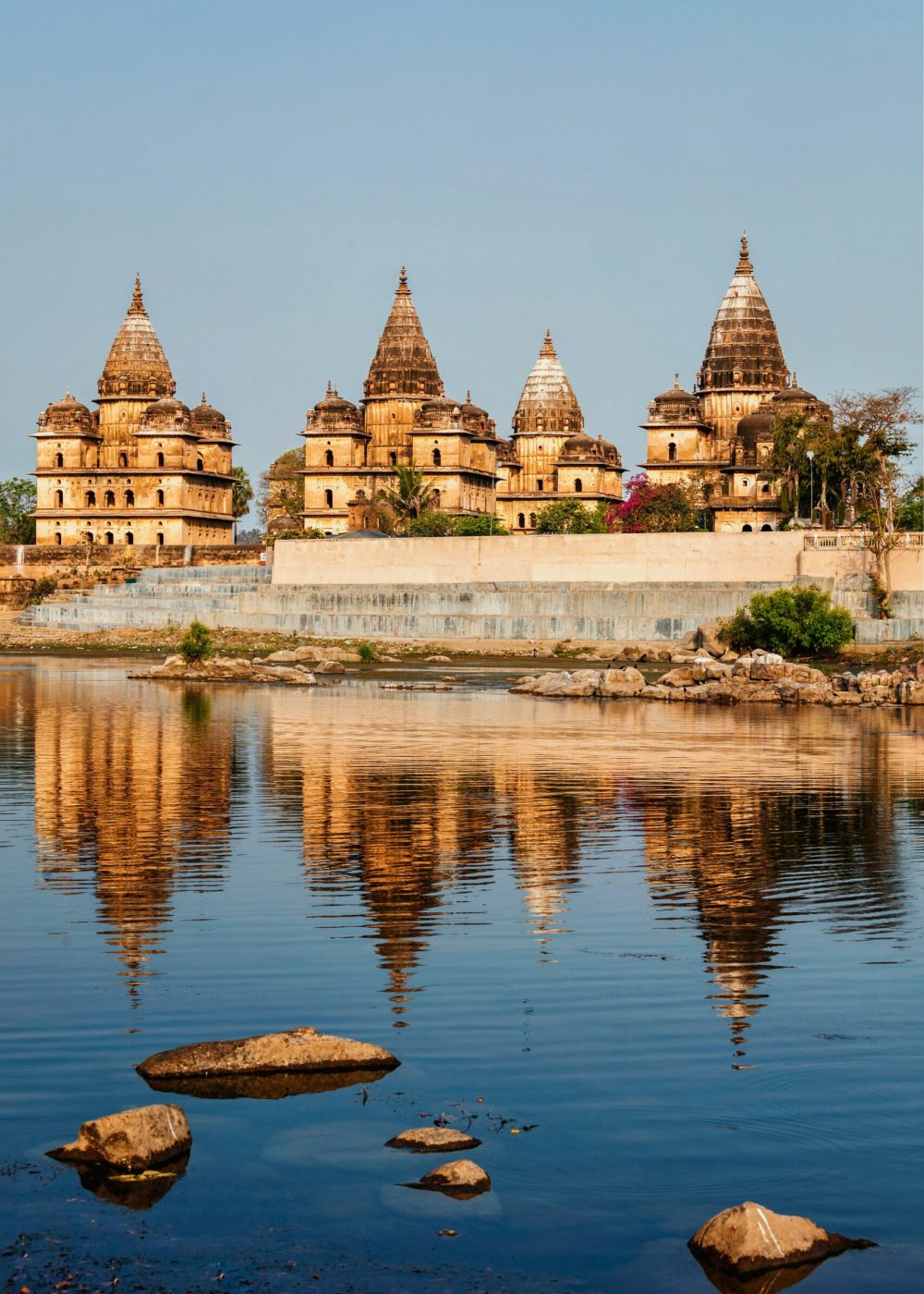
Cities rise from the desert like mirages made permanent—sandstone forts, carved balconies, courtyards cooled by fountains and shade. You step into a heritage space where every doorway feels like a threshold, every corridor feels like a story.
But the real luxury here isn’t the marble or the chandeliers.
It’s the pace.
It’s the pace.
A slow morning in a quiet courtyard. The sound of bangles. The scent of cardamom tea. A private guide who doesn’t rush you through history, but lets it unfold through meaning: why the windows are latticed, why the walls are painted, why certain colors are sacred.
You meet artisans whose hands still carry old knowledge—block printers pressing patterns into cloth as if stamping prayers, jewelers setting stones with a patience that feels almost radical. You begin to understand that in Rajasthan, craft is not trend. It is lineage.
At golden hour, the forts glow as if lit from within. You stand on a high terrace and watch the city below soften into dusk. Somewhere, a musician plays. Somewhere, incense burns. The day closes like a velvet curtain.
Rajasthan doesn’t just show you beauty.
It teaches you to live inside it.
It teaches you to live inside it.
Rajasthan dazzles the eyes. Varanasi opens the soul.
The Thread of Devotion
And then, quietly, India begins to shift you.
Not through grand moments, but through repetition. Through ritual. Through the way hands move when they light a lamp. Through the way people pause before entering a temple. Through the way the ordinary is treated as sacred.
You realize how much of your life has been lived at the surface.
India invites you deeper.


Varanasi: The River That Remembers
Varanasi is not a city you visit.
It is a presence.
It is a presence.
Before dawn, you step onto a boat and the river holds you. The Ganges is dark, wide, and impossibly calm. Fog drifts low over the water. On the ghats, silhouettes move in quiet devotion—bathing, praying, offering flowers that float away like small, bright promises.
The sun rises slowly, and the river turns to molten gold.
You watch life happen in its rawest form—laughter, grief, prayer, routine—all sharing the same steps, the same water, the same morning. There is no separation here between the spiritual and the everyday. Everything is included.
Later, you walk through lanes so narrow they feel like veins. Bells ring. Cows pass. Marigolds spill from baskets. The air is thick with incense and history. Your guide doesn’t translate India into something comfortable—they help you stay present long enough to feel what is true.
And then evening comes.
The aarti begins on the riverbank—fire lifted to the sky, chants rising, drums echoing across the water. Hundreds of small flames flicker in the dark like a constellation brought down to earth. You don’t understand every word, but you understand the devotion. You understand the surrender.
Varanasi doesn’t offer answers.
It offers perspective.
It offers perspective.
You leave with a strange calm—not because everything makes sense, but because you’ve touched something larger than your need for control.
What This Journey Gives You
Rajasthan gives you beauty you can step inside.
Varanasi gives you truth you can’t unsee.
Varanasi gives you truth you can’t unsee.
Together, they do something rare: they widen you.
They remind you that luxury is not only comfort—it is time, depth, and the freedom to be changed.

This is Vayara
Your Journey Begins Here
At VAYARA, we craft India journeys that honor both refinement and reverence—boutique heritage stays, trusted private guides, and experiences chosen for meaning: the right courtyard morning, the right artisan door, the right river moment. This isn’t India for the checklist. This is India for the seeker—curated with care, held with respect, and designed to meet you exactly where you are, and take you somewhere deeper. This isn’t an itinerary. It’s a ritual across three worlds—designed around your rhythm, your depth, your soul’s appetite for beauty and truth. If Morocco is calling, we’ll shape the journey that answers it.


